

Debt Settlement in Italy 2026: How International Debt Relief Programs Compare to Local Solutions for Managing Consumer Debt
Debt Settlement in Italy 2026: How International Debt Relief Programs Compare to Local Solutions for Managing Consumer Debt

I've spent the last few months digging into how Italian households are actually dealing with debt in 2026, and honestly, the landscape has shifted more than most people realize. Between rising interest rates on personal loans, credit card balances that never seem to shrink, and a growing number of international companies knocking on Italy's door with promises of 'debt freedom,' consumers here are facing choices their parents never had to think about. This article walks through what debt settlement really means, how Italy's own legal tools stack up against these newer international programs, and what you should watch out for before signing anything.
What Is Debt Settlement and Why It Matters for Italian Consumers
Debt settlement, at its core, is a negotiation. Instead of paying back the full amount you owe, a settlement company (or you, directly) approaches your creditors and asks them to accept a reduced lump sum as final payment. It's different from bankruptcy, which involves a court-supervised liquidation or discharge process, and it's different from debt consolidation, where you're simply combining multiple debts into one loan with a single payment. Settlement is messier, more negotiation-driven, and it doesn't always work — but when it does, it can shave significant amounts off what you owe.
Why does this matter so much right now? Because Italy's consumer debt picture in 2026 looks noticeably different than it did even three or four years ago. More families are carrying revolving credit balances, personal loans taken out during the cost-of-living squeeze haven't been fully paid down, and a fair number of people are juggling debts across multiple lenders — some Italian, some foreign fintech platforms that entered the market during the buy-now-pay-later boom.
The Rise of Consumer Debt in Italy
Recent data from Italian consumer associations suggests household debt tied to credit cards and personal financing has climbed steadily, driven partly by inflation eating into disposable income and partly by easier access to short-term credit through apps and online lenders. Regions like Lombardy and Lazio show some of the highest concentrations of over-indebted households, but the trend isn't limited to big cities anymore — smaller towns are seeing similar pressures as local credit unions tighten lending standards after a wave of defaults. This is exactly the environment where debt relief conversations start heating up, because people are looking for a way out that doesn't mean losing their home or facing years of wage garnishment.
Local Italian Debt Relief Solutions
Italy actually has a fairly robust set of domestic tools for people drowning in debt, though they're not always well understood by the average consumer. The most talked-about is the 'sovraindebitamento' framework — essentially a legal path for individuals who aren't eligible for standard commercial bankruptcy but still need relief. Alongside this, consumer protection agencies (associazioni dei consumatori) often step in to negotiate directly with banks on behalf of struggling borrowers, sometimes achieving reduced settlements without ever going to court. Traditional banks also offer restructuring options, like extending loan terms or temporarily freezing payments, though these tend to be conservative and slow-moving compared to what settlement companies promise.
How Italian Bankruptcy Law (Legge 3/2012) Works
Legge 3/2012, sometimes called the 'law on over-indebtedness,' gives consumers, small businesses, and even self-employed professionals a structured way to reorganize or eliminate debt when they genuinely can't keep up. Under this framework, a debtor can propose a 'piano di ristrutturazione dei debiti' (a debt restructuring plan) to creditors, which a court then reviews and can approve even without unanimous creditor consent in certain cases. If the plan is followed through, the debtor may eventually qualify for 'esdebitazione' — a formal discharge of remaining debt. It's a slower process than a private settlement negotiation, often taking a year or more from filing to resolution, but it carries the weight of Italian court oversight, which some people find reassuring compared to negotiating with an unregulated third party.
International Debt Relief Programs Entering the Italian Market
Here's where things get interesting. Over the past couple of years, several international debt settlement firms — many originally built around the US or UK model of negotiation-based relief — have started marketing directly to Italian consumers, often through online ads and multilingual customer service teams. These companies typically skip the court system entirely and instead pool your debt payments into an escrow-style account, then use that leverage to negotiate lump-sum settlements with individual creditors over time. It's faster in theory, sometimes cheaper in practice, but it also operates in a legal gray zone in Italy since these firms aren't always registered as licensed financial intermediaries under Italian regulation. That doesn't necessarily make them illegitimate, but it does mean consumers need to do more homework before signing up.
Comparing Costs, Timelines, and Outcomes
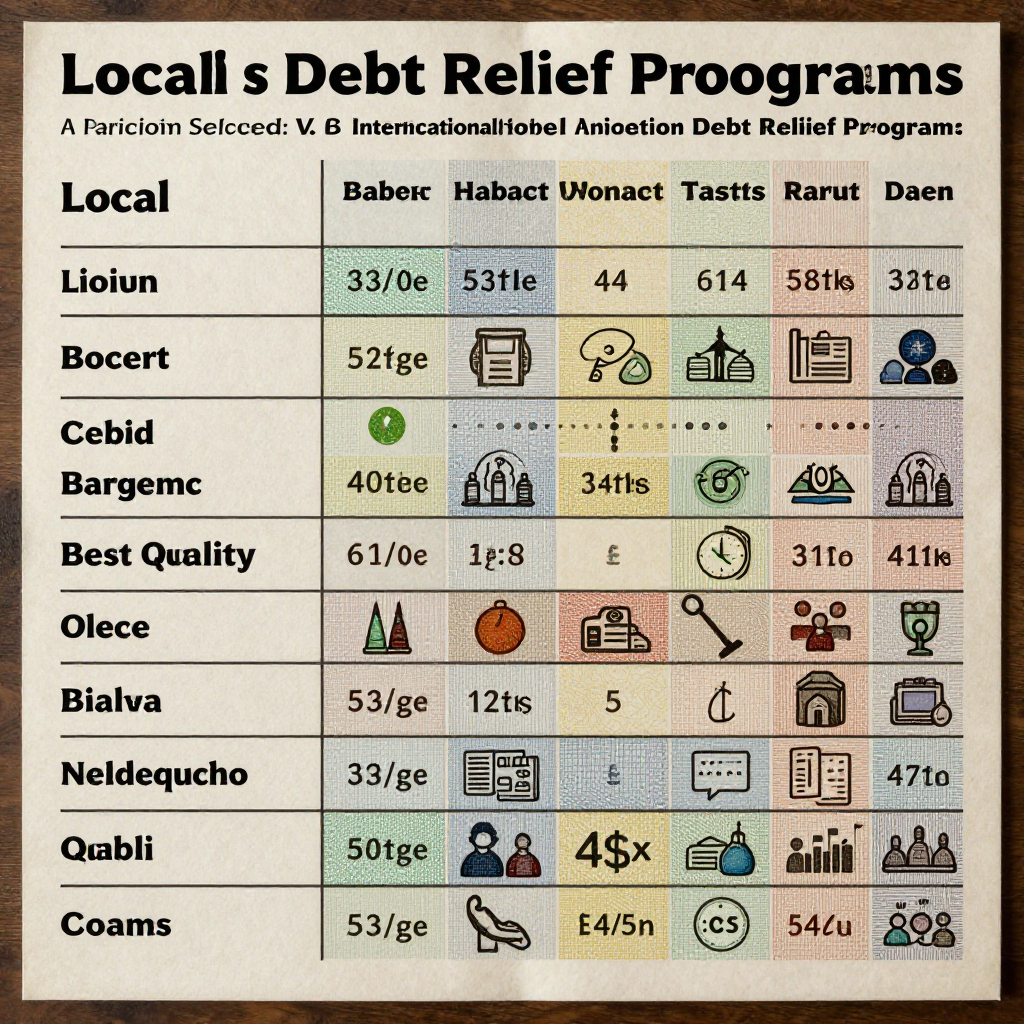
When I lined up the two approaches side by side, a few patterns became obvious. Local legal remedies under Legge 3/2012 tend to be slower — often 12 to 24 months — but cheaper in terms of ongoing fees, since court and legal costs are relatively fixed and regulated. International settlement programs often promise faster resolution, sometimes 24 to 48 months for full program completion, but they typically charge percentage-based fees on the settled amount, which can range widely depending on the provider.
Success rates also differ. Court-approved Italian restructuring plans have a fairly predictable outcome once approved, because creditors are legally bound by the court's decision. International negotiation programs, on the other hand, depend heavily on individual creditor cooperation — some creditors settle readily, others refuse outright, leaving consumers stuck mid-program with damaged credit and no resolution. For consumers weighing these options, it's worth reviewing debt settlement fees and risks associated with international providers before committing to any program, since fee structures and risk profiles vary enormously between companies operating in this space.
Red Flags That Signal a Risky Debt Settlement Program
Regardless of whether you're looking at a local or international option, certain warning signs should make you pause. Watch out for:
- Guarantees of a specific settlement percentage before any negotiation has even started
- Demands for large upfront fees before any debt has actually been settled
- Vague or missing information about licensing status in Italy or the EU
- Pressure to sign quickly without time to review contract terms in Italian
- Lack of clear communication about how creditor negotiations are actually progressing
How to Choose the Right Debt Relief Path in Italy
My honest advice is to start with an honest inventory of your situation. If your debt is primarily with Italian banks and you have stable, documentable income (even if reduced), the Legge 3/2012 route through a licensed 'organismo di composizione della crisi' is usually worth exploring first, since it offers legal protection and a court-backed resolution. If your debt is spread across international creditors, foreign fintech lenders, or credit cards issued outside Italy, an international settlement program might actually have more leverage to negotiate, simply because those creditors are used to dealing with settlement firms already. The key is matching the tool to the type of debt you're carrying, not just picking whichever option markets itself most aggressively.
Common Mistakes to Avoid When Settling Debt
A few mistakes come up again and again. First, people forget that forgiven debt can sometimes trigger tax implications in Italy, since a canceled debt may be treated as taxable income depending on the circumstances — this is something to clarify with a commercialista before finalizing any settlement. Second, working with unlicensed or unregistered agencies is a real risk; always verify that a firm is registered with the appropriate Italian financial authority or, for cross-border firms, check their regulatory status in their home country. Third, missing legal deadlines under consumer protection filings can void your ability to use certain protections later, so timing matters more than people expect.
Frequently Asked Questions
Is debt settlement legal in Italy? Yes, both court-supervised restructuring under Legge 3/2012 and private negotiation-based settlement are legal, though they operate under different regulatory frameworks.
How long does the process take? Local legal remedies typically take 12 to 24 months, while international settlement programs can range from 24 to 48 months depending on creditor cooperation.
Can international companies legally operate in Italy? Many can, provided they comply with EU financial services regulations, but it's essential to verify their registration status before engaging, since enforcement and consumer protections vary between jurisdictions.